

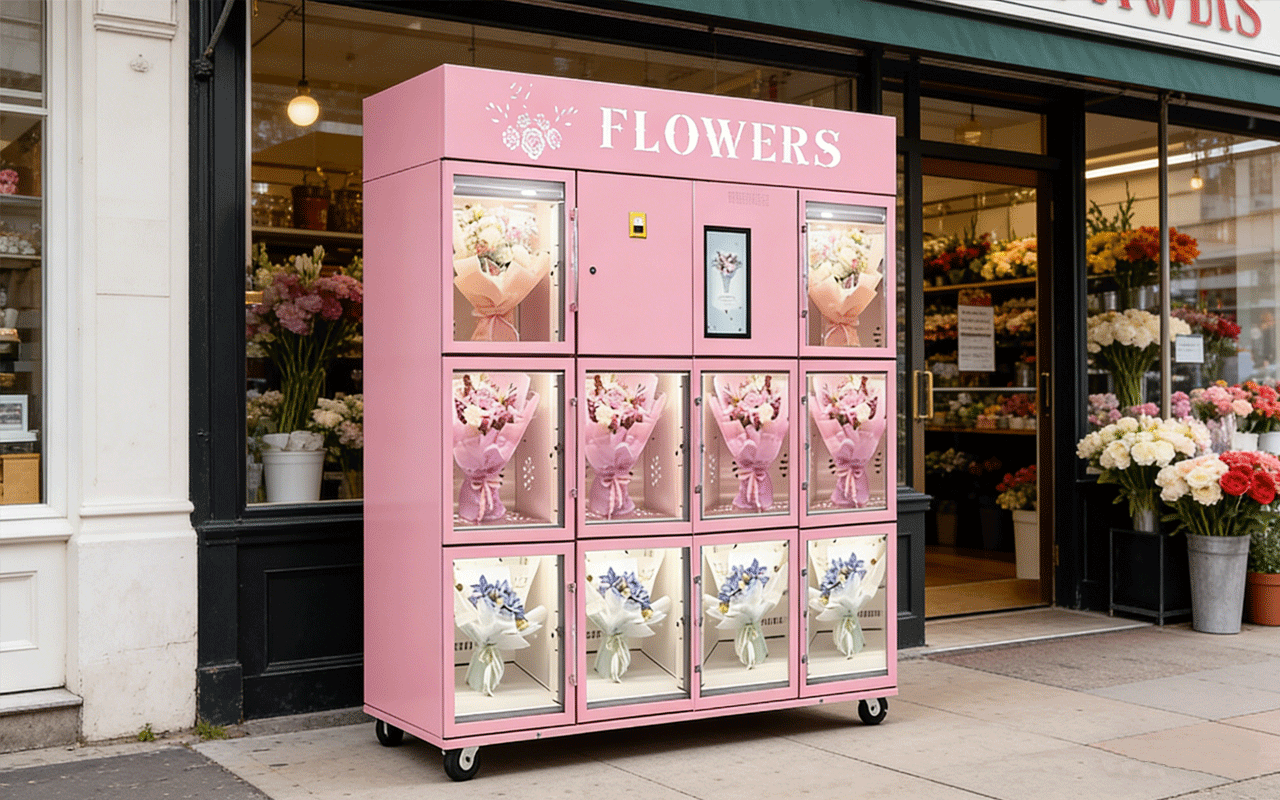
Flower vending machines are creating new opportunities for florists, vending operators, retailers, and property owners who want to sell bouquets beyond traditional store hours. By combining refrigerated storage, automated purchasing, and flexible installation options, these machines can make flowers available in locations where opening a conventional flower shop may not be practical.
For businesses considering this retail model, choosing the right machine is an important first step. Storage conditions, bouquet capacity, payment compatibility, location, replenishment, and ongoing operating costs all influence the suitability of a solution.
This guide explains how flower vending machines work, which features buyers should compare, and what to consider before purchasing equipment for a commercial project.
What Is a Flower Vending Machine?
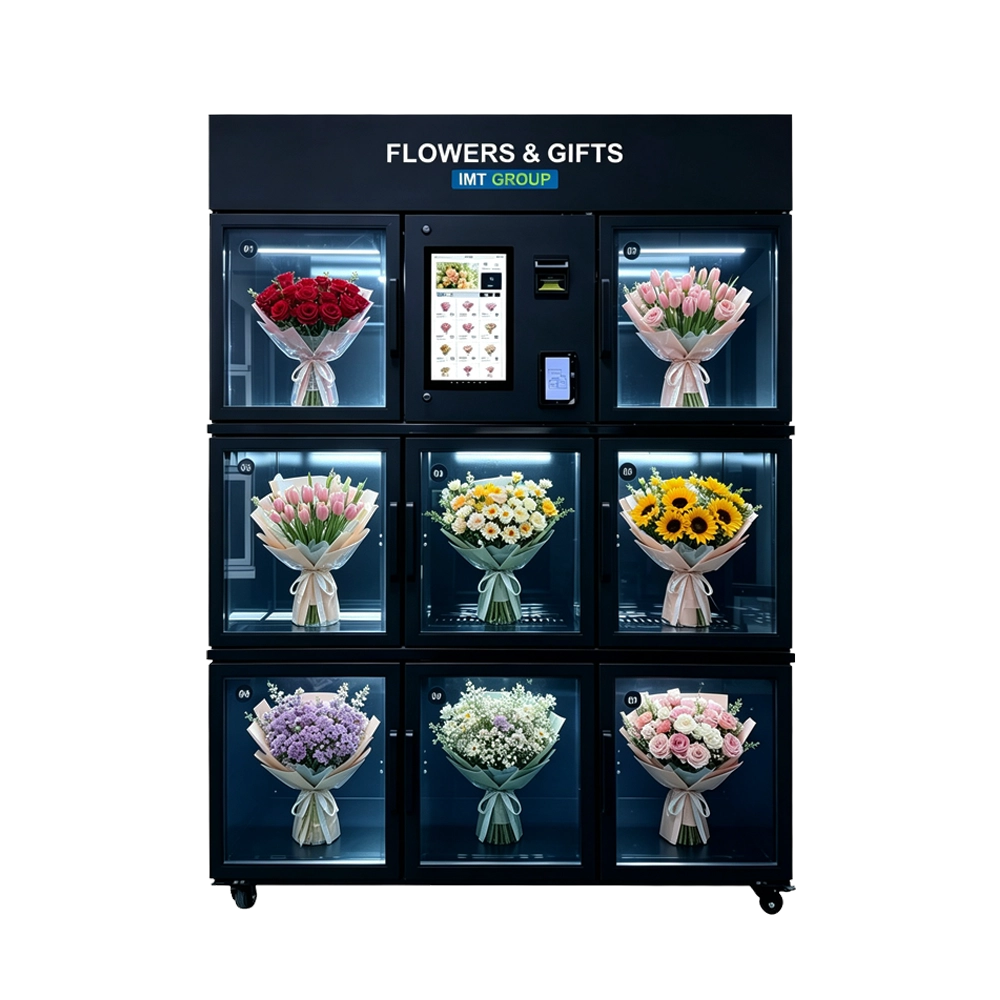
A flower vending machine is an automated retail unit designed to display and sell bouquets without requiring a salesperson to be present for every transaction. Depending on its configuration, the machine may include refrigerated storage, a product display area, a touchscreen interface, electronic payment options, and an automated product collection system.
Customers can browse the available bouquets, select a product, complete payment using a supported method, and collect their purchase. Operators replenish the machine with fresh flowers and monitor its condition according to their operating schedule.
Unlike a traditional flower shop, a vending machine can be installed in a shared commercial space or another suitable location where customers already pass through during the day or evening. Actual operating hours depend on the site’s access rules, electricity supply, maintenance arrangements, and local requirements.
Businesses evaluating different configurations can review the IMT flower vending machine range to explore available commercial options.
Why Are Businesses Considering Flower Vending Machines?
Traditional flower retail often depends on shop opening hours, staffing, and a fixed retail location. An automated machine offers another way to reach customers, particularly when they need a bouquet outside normal business hours or while visiting another destination.
Potential applications include:
- Transportation hubs: Airports and train stations may serve travelers who need last-minute gifts or flowers for an arrival or departure.
- Hospitals and medical centers: Visitors may look for bouquets when visiting patients, subject to the facility’s rules and hygiene requirements.
- Shopping malls: A machine can provide an additional purchase option without requiring a full-size retail unit.
- Hotels and hospitality venues: Flowers may appeal to guests looking for gifts or special-occasion purchases.
- Office buildings and residential developments: These locations may provide convenient access to flowers for residents, employees, and visitors.
These are potential applications rather than guaranteed high-performing locations. Before installation, operators should evaluate customer demand, foot traffic, visibility, rental costs, competition, access permissions, and the practical process for restocking flowers.
Which Features Should You Compare Before Buying?
Not every flower vending machine offers the same storage design, payment options, or management functions. Buyers should compare actual specifications instead of relying on general descriptions.
1. Refrigerated Storage and Temperature Control
Fresh flowers are sensitive to storage conditions. A suitable machine should have a storage configuration designed for the types of flowers and bouquets the operator plans to sell.
When comparing machines, ask the manufacturer about the temperature range, temperature adjustment options, air circulation, insulation, and recommended operating conditions. Also confirm whether the proposed configuration suits the local climate and installation environment.
Temperature control can support flower storage, but it does not eliminate the need for proper sourcing, handling, cleaning, and regular replenishment. Different flower varieties may have different storage requirements.
2. Product Visibility and Display Design
Customers need to see the bouquets clearly before making a purchase. Display layout, lighting, glass visibility, and bouquet arrangement can all affect the presentation of products.
In warm or humid environments, condensation may also affect visibility. Ask whether the machine includes anti-fog features or another solution suited to the expected operating conditions.
The most suitable display design depends on bouquet dimensions, packaging, the number of product selections, and the space available at the installation site.
3. Bouquet Capacity and Configuration
Capacity should match the operator’s expected demand and replenishment schedule. A larger machine may offer more display space, but it may also require more floor space and a different inventory strategy.
Before choosing a model, consider:
- The number of bouquets to be stocked at one time
- Bouquet height, width, packaging, and shape
- The variety of products to be offered
- The space available at the installation site
- How often staff can replenish the machine
- How the machine handles different product sizes
Ask the manufacturer to confirm usable capacity for your actual bouquet dimensions rather than relying only on a general product count.
4. Touchscreen and Payment Compatibility
A clear purchasing interface can help customers browse products and complete transactions. Payment requirements, however, differ by market and customer group.
Before ordering, confirm which payment methods the machine supports and whether additional hardware, payment-provider integration, or local configuration is required. For international projects, verify compatibility with the payment systems commonly used in the target country.
Also ask how transaction failures, refunds, and payment-system updates are handled.
5. Remote Monitoring and Management
For operators managing several machines, remote management can make routine operations easier. Depending on the software and configuration, available functions may include sales reporting, inventory monitoring, equipment-status checks, and remote operation.
Confirm which functions are included, whether they require a subscription, and whether the software supports your planned number of machines. Ask for a demonstration of the actual interface before making a purchasing decision.
Remote management does not replace physical restocking, cleaning, or maintenance. Instead, it can help operators identify issues and plan their work more effectively.
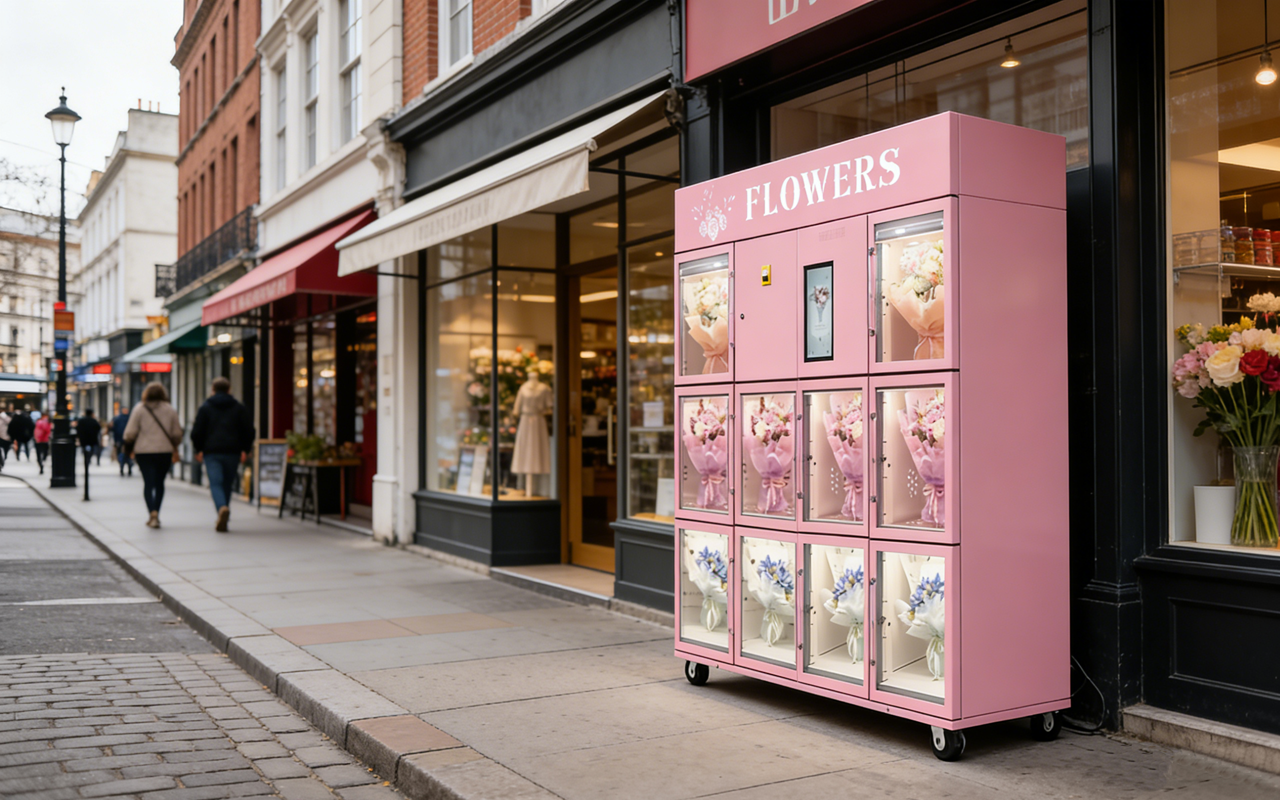
How Do You Choose the Right Flower Vending Machine?
Start with the business model and location rather than choosing a machine based on appearance alone.
A florist expanding beyond its shop may prioritize bouquet presentation and product variety. A vending operator may focus on remote monitoring, payment integration, serviceability, and the ability to manage multiple units. A property owner may need a compact configuration that fits the available space and meets building requirements.
Create a checklist covering:
- Installation dimensions and available floor space
- Required bouquet capacity and product sizes
- Refrigeration and storage specifications
- Display design and lighting
- Supported payment methods
- Software and remote management functions
- Electricity and environmental requirements
- Cleaning, replenishment, and maintenance
- Warranty, spare parts, and after-sales support
- Shipping, installation, and total project cost
Compare machines against this checklist and request written confirmation of the specifications that matter most to your project.
How Much Does a Flower Vending Machine Cost?
The total investment depends on the machine configuration and the requirements of the installation site. The equipment price is only one part of the budget.
A realistic cost estimate should account for:
- Equipment and optional features
- Customization and branding
- International shipping, insurance, and applicable import charges
- Site preparation and installation
- Payment processing fees
- Electricity and routine maintenance
- Flower sourcing, packaging, and transportation
- Staff time for replenishment and cleaning
- Unsold inventory and product losses
- Site rental or revenue-sharing arrangements
When estimating profitability, use realistic assumptions for selling price, daily sales, product cost, waste, operating expenses, and seasonal changes. A machine’s revenue potential varies by location and operating model, so no particular payback period should be assumed without reliable project data.
A useful approach is to create conservative, expected, and optimistic sales scenarios before committing to a purchase.
How Can You Keep Flowers Fresh in a Vending Machine?
Freshness depends on more than refrigeration. Operators should establish a process for purchasing, preparing, storing, displaying, and rotating bouquets.
Choose suppliers who can deliver flowers at a suitable quality level. Prepare bouquets consistently, use appropriate packaging, and follow storage recommendations for each flower type. Inspect stock regularly and remove products that no longer meet the required sales standard.
Replenishment frequency should reflect actual sales and the shelf life of the products being offered. Review sales data to understand which bouquet styles sell quickly, which remain in stock, and how demand changes around holidays or local events.
Cleaning the storage area and following the machine manufacturer’s maintenance recommendations are also important parts of routine operation.
How Do You Evaluate a Flower Vending Machine Manufacturer?
The manufacturer should be able to explain the equipment specifications, customization options, operating requirements, and after-sales arrangements clearly.
Before placing an order, ask:
- Which machine configurations are available?
- Can the display, capacity, dimensions, or exterior branding be customized?
- Which payment methods and software functions are supported?
- What are the refrigeration specifications and recommended operating conditions?
- What warranty coverage is provided?
- Are spare parts available for future maintenance?
- What are the production lead time and shipping arrangements?
- What installation, technical documentation, and after-sales support are available?
Request current product specifications, photographs or videos of the actual machine, and written details of any features that are important to your project.
If you are comparing commercial models, visit the IMT flower vending machine product page to review the available configurations and identify the options that fit your intended market and operating requirements.
Is a Flower Vending Machine Right for Your Business?
A flower vending machine may be worth evaluating if your business wants to extend retail availability, reach customers in new locations, or test an automated sales channel without opening a conventional shop at every site.
Its suitability depends on customer demand, location costs, flower supply, storage requirements, replenishment efficiency, and the machine’s compatibility with your operating model.
Before investing, assess the site, estimate operating costs, confirm the equipment specifications, and develop a practical inventory and maintenance plan. These steps can help you make a more informed purchasing decision.
Frequently Asked Questions
Can a flower vending machine operate 24/7?
It may support unattended sales around the clock when the installation site remains accessible and the machine has a reliable power supply and suitable maintenance arrangements. Actual operating hours depend on site access and local requirements.
Does a flower vending machine need refrigeration?
For machines intended to store fresh bouquets, refrigeration and suitable temperature control are important considerations. Buyers should confirm the actual storage specifications and ensure they are appropriate for the flowers being sold.
Can the machine accept cashless payments?
Some configurations support cashless payment systems, but compatibility varies. Confirm the supported payment hardware, payment providers, and local requirements before ordering.
How often should the machine be restocked?
The required frequency depends on sales volume, bouquet shelf life, storage conditions, and the replenishment process. Operators should monitor stock and adjust their schedule based on actual sales.
What should I prepare before requesting a quotation?
Prepare your target country, intended installation location, approximate machine dimensions, bouquet sizes, expected capacity, preferred payment methods, branding requirements, and any software or management needs. This information helps the manufacturer recommend a more suitable configuration.
Discuss Your Flower Vending Project with IMT
Choosing the right equipment starts with understanding your products, customers, location, and operating plan. Compare the specifications carefully and confirm the details required for your market before placing an order.
Explore the IMT flower vending machine range to review available options and contact IMT about a configuration for your commercial project.

IMT vending Machine
IMT vending Machine
IMT Vending Machine
IMT Vending Machine
IMT vending machine
Carey IMT